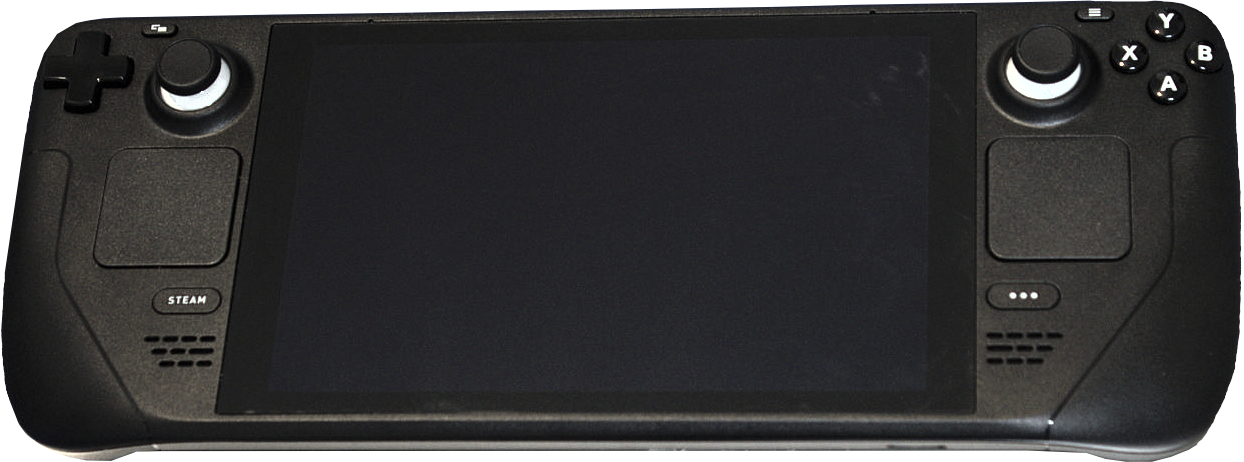
Handheld gaming hasn't commanded this much attention since the Game Boy era, and the numbers back up the noise. Nintendo shipped 19.86 million Switch 2 consoles worldwide in the system's first ten months, making it the fastest-selling console the company has ever produced. Meanwhile, Valve, Asus, Lenovo, and MSI are elbowing each other for shelf space at Best Buy with portable PCs that would have sounded like science fiction five years ago: eight-core processors, OLED screens pushing 144Hz, and enough graphics muscle to run Cyberpunk 2077 at a smooth 60 frames per second on a battery.
But 2026 has also delivered a bucket of cold water. A global memory shortage — driven largely by AI data centers hoovering up DRAM and NAND flash — has sent hardware prices in exactly the wrong direction. Valve raised Steam Deck OLED prices by as much as 46 percent in late May. Nintendo announced the Switch 2 will climb from $449.99 to $499.99 on September 1. The most capable Windows handhelds now start at a thousand dollars.
So the question facing American buyers this summer isn't whether handhelds are good. They are. It's whether the machines behind the hype justify prices that now overlap with full gaming laptops. We dug into the current lineup — the specs, the street prices, and the reviews — to sort out where the money actually makes sense.
Four Machines, Four Very Different Pitches
The handheld market in mid-2026 isn't really one market. It's at least three, and understanding that is the single most useful thing a buyer can do before opening a wallet.
At one end sits the Nintendo Switch 2, a closed console with an exclusive library nobody else can touch. In the middle is Valve's Steam Deck OLED, an aging but beloved Linux-based portable built around the Steam library. At the premium end are the Windows handhelds — the Asus ROG Xbox Ally X and Lenovo Legion Go 2 — which are, functionally, small gaming PCs with controllers bolted on. Below all of them, a thriving budget tier of Android-based devices like the $219 Retroid Pocket 5 and the roughly $299 AYN Odin 2 handles retro emulation and game streaming for a fraction of the cost, according to Engadget's 2026 handheld guide.
Each category answers a different question. Nintendo asks what you want to play. Valve asks how much of your Steam backlog you want in bed. Asus and Lenovo ask how much raw performance you're willing to carry. None of them is wrong — but paying Windows-handheld money for Switch-style expectations is how buyers end up disappointed.
The Price Shock Nobody Ordered
Before comparing spec sheets, it's worth understanding why every one of these devices costs more than it did a year ago — or soon will.
In late May 2026, Valve raised the Steam Deck OLED 512GB model from $549 to $789 and the 1TB model from $649 to $949, increases of 44 and 46 percent on hardware that hasn't changed since late 2023, as reported by gHacks. Valve didn't dress it up:
"Steam Deck itself hasn't changed; these new prices reflect the current state of component costs and other global logistical challenges across the industry as a whole." — Valve, May 2026
The culprit is memory. Surging demand from AI infrastructure has pushed DRAM and NAND flash prices sharply higher through 2026, and industry analysts warn the climb isn't over. Nintendo cited "the ongoing global memory shortage" when it announced on May 9 that the Switch 2's US price will rise to $499.99 in September. Sony has nudged PlayStation 5 prices upward as well.
The practical takeaway for shoppers is uncomfortable but simple: waiting for a sale is no longer a reliable strategy. In this market, hardware you're eyeing in June may genuinely cost more by the holidays.
Spec Sheet Reality Check
Here's how the major contenders stack up at US retail as of June 2026.
| Device | Price (June 2026) | Display | Chip & RAM | Storage |
|---|---|---|---|---|
| Nintendo Switch 2 | $449.99 ($499.99 w/ Mario Kart World) | 7.9" LCD, 1080p, up to 120Hz | Custom Nvidia Tegra T239 | 256GB |
| Steam Deck OLED | $789 (512GB) / $949 (1TB) | 7.4" OLED, 1280x800 | AMD APU, 16GB | 512GB–1TB |
| ROG Xbox Ally X | $999.99 | 7" IPS, 1080p, 120Hz VRR | Ryzen AI Z2 Extreme, 24GB | 1TB |
| Lenovo Legion Go 2 | ~$2,000 | 8.8" OLED, 1920x1200, 144Hz VRR | Ryzen Z2 / Z2 Extreme, up to 32GB | 1TB |
| Lenovo Legion Go S (SteamOS) | $990–$1,580 | 8" IPS, 1920x1200, 120Hz | Ryzen Z2 Go / Z1 Extreme, up to 32GB | Up to 1TB |
Two things jump out. First, the Switch 2 — long criticized as expensive for a Nintendo machine — is now the cheapest serious option on the board, and it stays that way even after September's increase. Second, after Lenovo's own spring repricing, the Steam Deck OLED at $789 is once again the cheapest new SteamOS hardware on the market — cold comfort, given its internals haven't changed since 2023.
Switch 2: The Safe Bet With a Moat
Nintendo's follow-up act has been close to flawless commercially. The Switch 2 moved more than 3.5 million units in its first four days and closed its first fiscal year at 19.86 million shipped worldwide, per figures compiled on the system's Wikipedia entry from Nintendo's investor reports. Mario Kart World, the launch flagship, has sold 14.70 million copies on its own.
The hardware finally feels modern. The 7.9-inch 1080p screen runs at up to 120Hz with HDR in handheld mode and 4K at 60Hz docked, powered by a custom Nvidia Tegra T239 chip that delivers a genuine generational leap over the 2017 original. Battery life spans roughly 2 to 6.5 hours depending on the game — unremarkable, but in line with the class.
The honest caveats: 256GB of internal storage fills quickly in an era of 60GB downloads, the LCD panel gives up contrast to the OLED competition, and first-party games routinely cost $70 to $80. What you're really buying is the moat — Mario, Zelda, and the rest simply do not exist anywhere else. For households, commuters, and anyone who wants zero fiddling, the Switch 2 remains the easiest recommendation in gaming.
The Windows Handhelds Finally Grew Up
For years, the knock on Windows portables was that the hardware wrote checks the software couldn't cash. The Asus ROG Xbox Ally X — built in partnership with Microsoft and launched in October 2025 at $999.99 — is the first machine that largely settles the argument.
The specs are legitimately potent: AMD's Ryzen AI Z2 Extreme with eight Zen 5 cores, 24GB of fast LPDDR5X memory, a 1TB SSD, and a 7-inch 1080p 120Hz screen with variable refresh, all fed by a large 80Wh battery in a 1.6-pound chassis with Xbox-controller-style grips. In Club386's testing, it averaged 61 fps in Cyberpunk 2077 and topped 105 fps in Forza Horizon 5 in its standard handheld power mode — territory no Switch or Steam Deck can visit. Just as important is Microsoft's new full-screen Xbox experience, a controller-first Windows 11 mode that strips out desktop clutter and background processes. Club386's verdict: "Setting a new standard for Windows handhelds, ROG Xbox Ally X skilfully marries cutting-edge hardware and software to great effect."
Lenovo's Legion Go 2 takes the other premium path: a spectacular 8.8-inch OLED display at 1920x1200 and 144Hz with VRR — arguably the finest screen ever fitted to a handheld — plus detachable controllers and up to 32GB of RAM. The trade-offs are heft and money. At just over two pounds it's a commitment for the wrists and the carry-on, and Lenovo raised its price to roughly $2,000 in early April — double the Ally X — without delivering performance meaningfully beyond it.
The catch for both: battery life under heavy load still hovers around two to three hours, and even a cleaned-up Windows is fussier than a console. These are enthusiast machines, priced accordingly.
The Value Play Hiding in Plain Sight
For a few months, this section would have written itself: the Lenovo Legion Go S with SteamOS preinstalled paired Valve's excellent console-style software with a bigger, sharper 8-inch screen and newer AMD silicon, at a price that undercut the Steam Deck. Then the memory crunch caught up with it. In April, Lenovo raised the SteamOS Z2 Go configuration from $650 to $990 and the Z1 Extreme model from $900 to $1,580 — jumps of 52 and 75 percent that erased the value pitch overnight. A SteamOS edition of the Legion Go 2 arrived this June at $1,199 — nobody's bargain.
So where does value actually live in mid-2026? Three places. The Switch 2, $449.99 until September 1, delivers more polished gaming per dollar than anything else here. The used market is flush with pre-hike Steam Decks, and since SteamOS updates continuously, a secondhand unit plays like a new one. And for players who mostly want retro libraries or cloud streaming, the sub-$300 Android tier covers a shocking amount of ground for a fraction of the money.
That reframes the new Steam Deck OLED, too. At $789 it carries a painful 44 percent markup on unchanged hardware, yet with every SteamOS alternative now costing more, it has backed into being the cheapest new ticket into Valve's ecosystem. Whether four-year-old internals deserve that money is the real question — thriving secondhand listings suggest plenty of buyers have answered it.
So, Is the Hype Justified?
Mostly, yes — with an asterisk shaped like a price tag.
The technology is real. A Switch 2 outsold every console launch in Nintendo's history because it delivers exactly what it promises. The Xbox Ally X genuinely runs modern AAA games at frame rates that embarrass its predecessors, and SteamOS has matured into the most pleasant handheld software anywhere. Anyone claiming handhelds are a fad hasn't held one lately.
What's not justified is paying premium prices for the wrong machine. The buying logic in June 2026 comes down to three sentences. If you want Nintendo's games or a family console, buy the Switch 2 before September's price hike. If you want maximum portable power and can spend $1,000, the ROG Xbox Ally X is the current benchmark, with the Legion Go 2 as the big-screen alternative. If you want PC gaming on a budget, hunt the used Steam Deck market or start with the sub-$300 Android tier — because after this spring's repricing wave, the cheap new SteamOS handheld simply no longer exists.
The handheld boom is real. Just make sure your money lands on the right side of it.